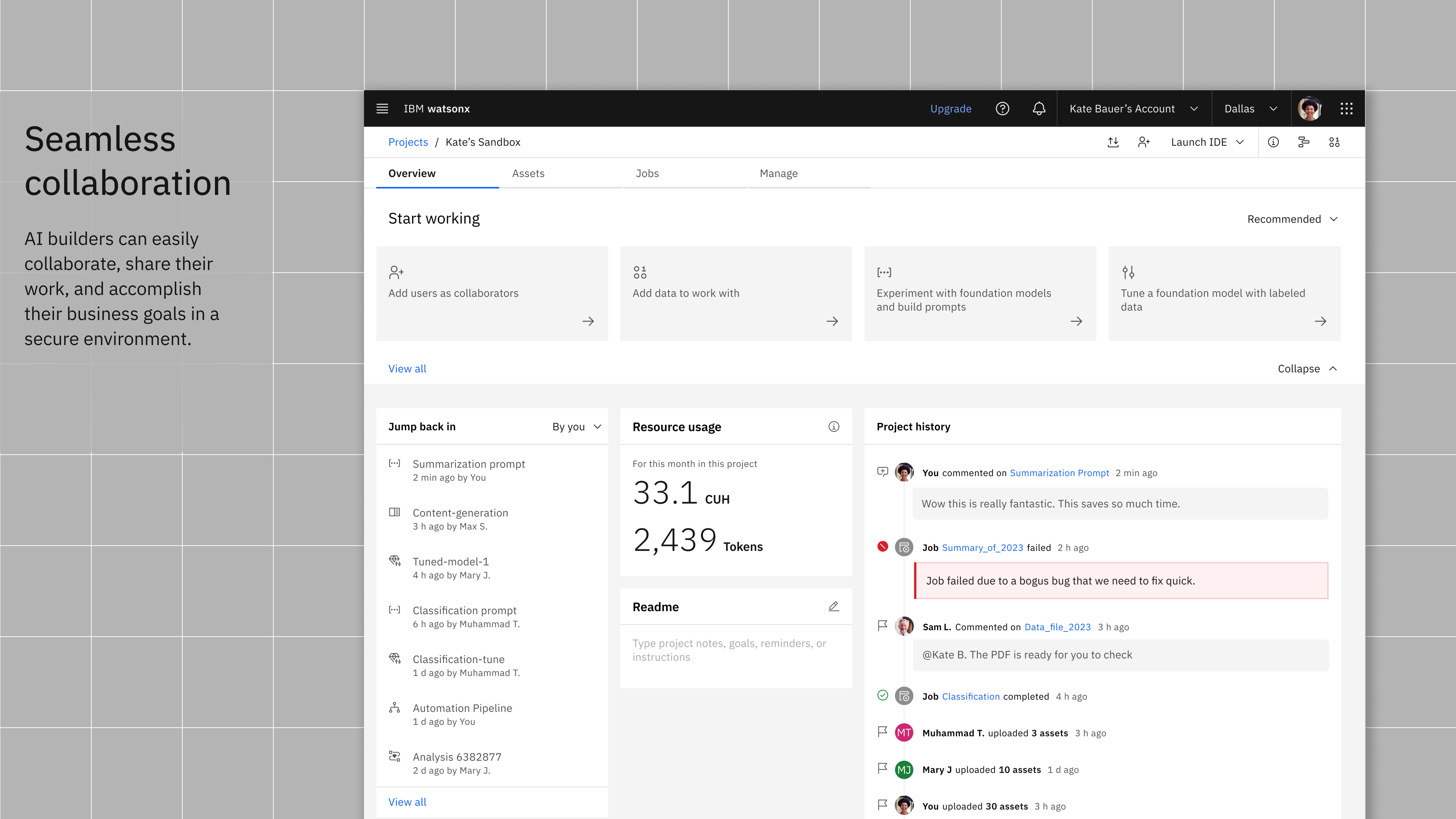
watsonx.ai is IBM's studio for building, tuning, and deploying AI models. Enterprise teams needed one place to work across the whole AI lifecycle (prompting, tuning, grounding models in their own knowledge) without losing track of what a model was doing or why. As design lead, I shaped a task-based experience built on Carbon, with new AI-specific patterns that make model behavior visible and trustworthy. The work received an iF Design Award in 2025.
Client
IBM
DELIVERABLES
SYSTEMS DESIGN AI TRANSPARENCY PATTERNS TASK-BASED UX USER RESEARCH
Year
2025
Role
DESIGN LEAD


Design strategy
watsonx.ai had to win over two audiences with different instincts. Data scientists and AI engineers want depth: every model, parameter, and tuning option within reach. Business and product teams want outcomes: a model that works for their use case without needing to become ML experts. An enterprise AI studio that only serves one of them stalls inside the organization. My strategy was to organize the product around the jobs both groups share (prompt, tune, ground, deploy) instead of around the underlying tools. Experts can go deep within each task, and newcomers always know which step they're on and what comes next. On top of that, a transparency layer built on Carbon shows where a model is acting and why, which is what turns enterprise curiosity into adoption.



Design decisions
Task-based, not tool-based. Instead of exposing every capability at once, the studio is organized around the jobs teams actually do: prompt, tune, ground, deploy. Transparency as a layer. New AI-specific patterns on top of Carbon mark where a model is acting, so users can tell generated output from their own work. Multi-model by design. Teams can compare and switch models without relearning the interface. Grounded in research. Ethnographic research with enterprise users, usability testing across AI workflows, and feedback loops with IBM teams and clients shaped each decision.