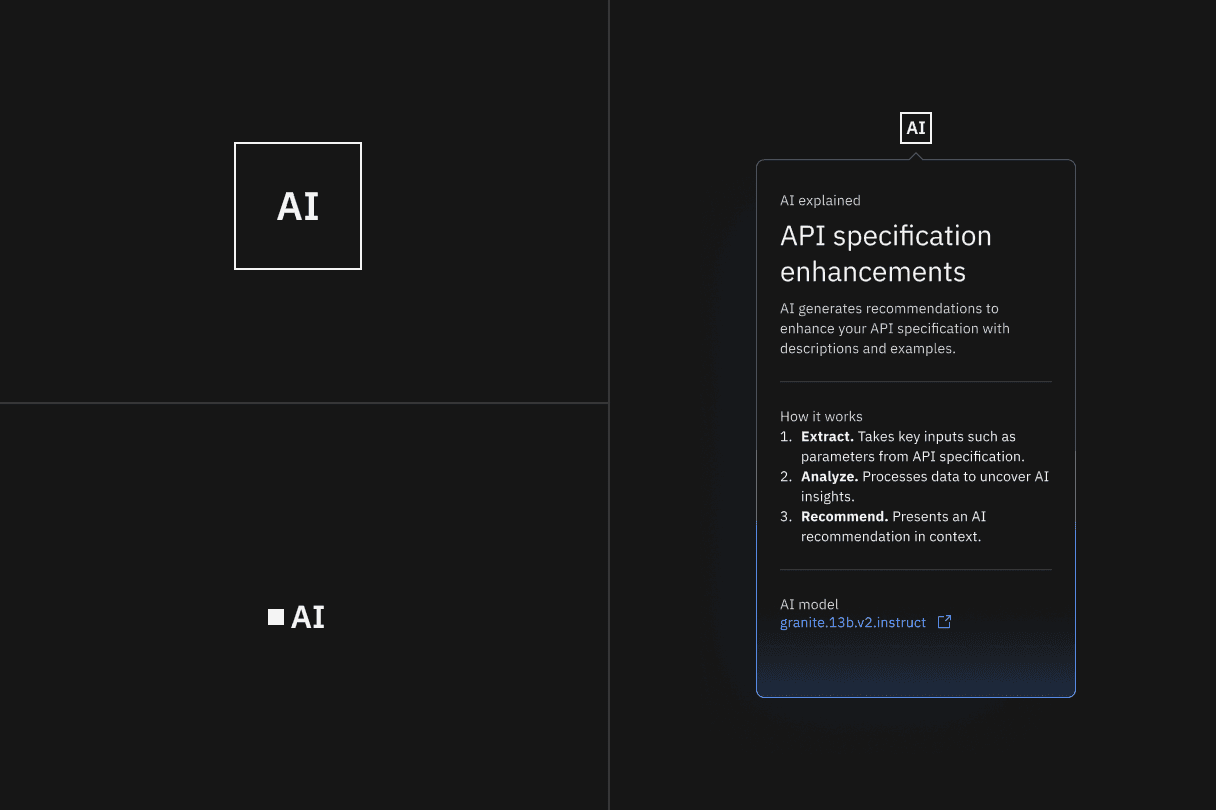
As AI moved from answering to acting, IBM products needed a consistent way to show what AI is doing. Carbon for AI extends IBM's Carbon Design System with a visual language for AI-generated and AI-recommended content, so users can always tell what came from a model and what came from a person. I contributed components, prototypes, and documentation that teams across IBM build on.
Client
IBM
DELIVERABLES
AI VISUAL LANGUAGE COMPONENTS PROTOTYPES DOCUMENTATION
Year
2025
Role
UI/UX DESIGNER

Design strategy
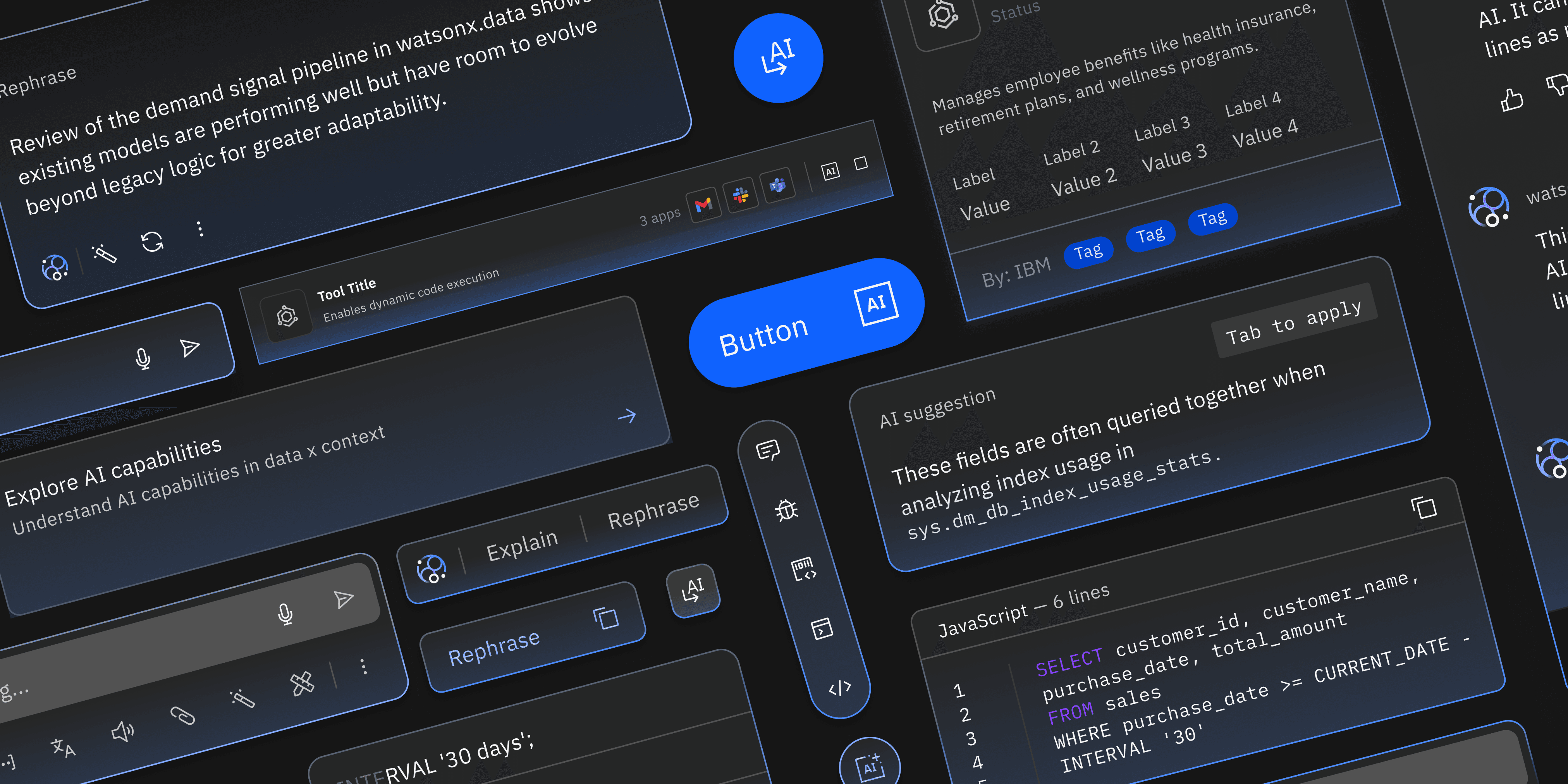
A design system has two audiences: the product teams who build with it and the end users who live with the result. For AI, both had the same need. Teams needed one approved way to show AI involvement instead of inventing their own, and users needed to recognize AI content the same way in every IBM product. My strategy was to make AI a layer, not a new system. Carbon for AI sits alongside the existing Carbon themes, so teams can adopt it incrementally without redesigning their products. Its visual language, light as the metaphor, signals AI involvement without alarming people. And by designing for AI that acts on a user's behalf, not just AI that suggests, the system was ready for agentic products before teams had to ask.


Design decisions
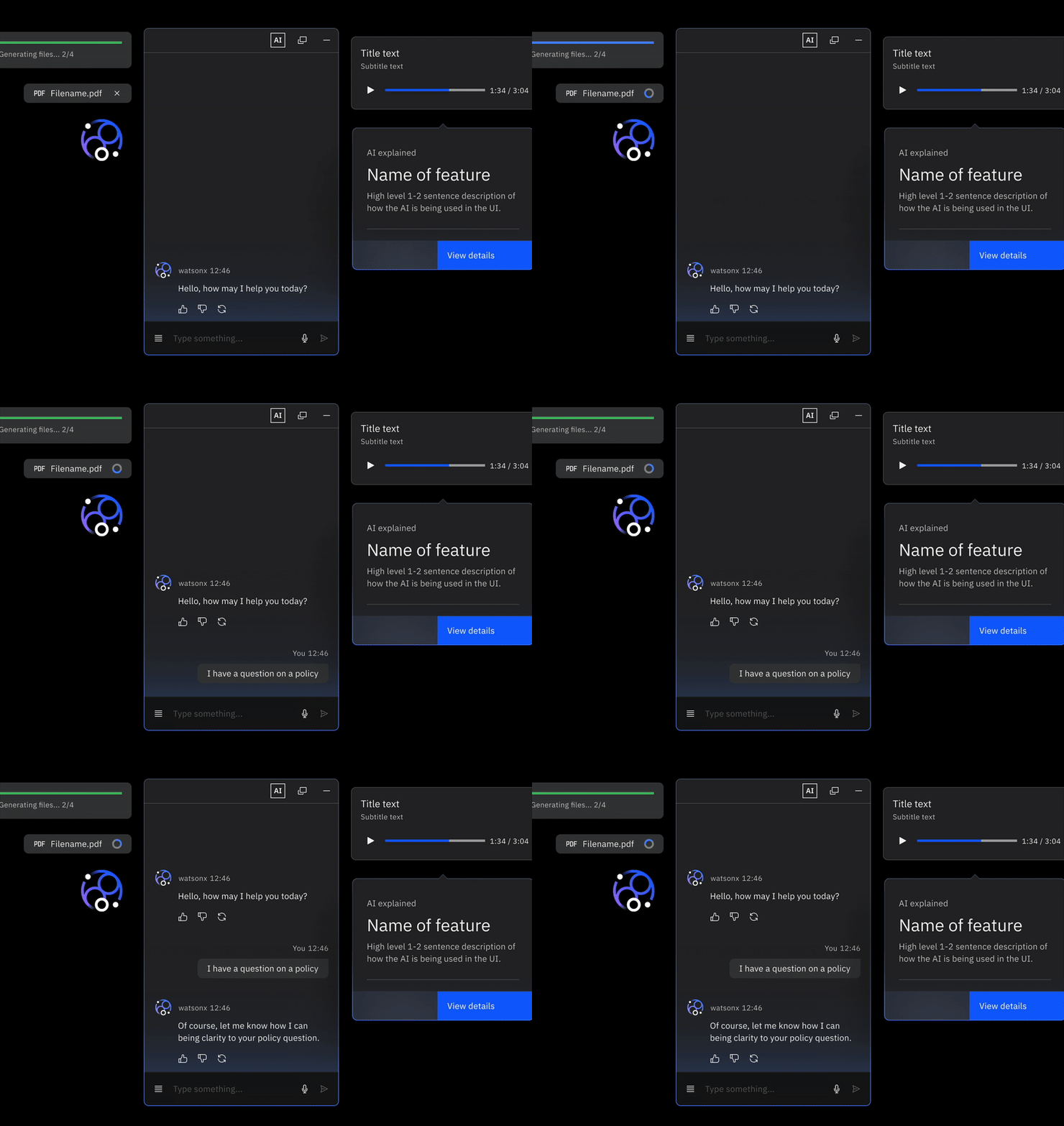
Light as the metaphor. AI content is "illuminated": a distinct glow and gradient treatment that signals AI involvement without alarming users. Coexist, don't replace. Carbon for AI sits alongside existing Carbon themes, so products can adopt it gradually rather than redesign. Ready for agents. The patterns cover AI that recommends as well as AI that acts on a user's behalf, which agentic products need from day one.